Market Report - November 2026
#CropReport
BLACK PEPPER
Indonesia:
Harvest Season: July to September
- Indonesian Black Pepper has currently gone off-season, with harvests having completed by August-September.
- Expecting better price realisation, farmers are holding back stocks, which has kept market arrivals to be lower compared to last year.
- Export demand remains active especially from markets like India, but uneven across other regions like China and Vietnam. This is leading prices to remain stable to firm.
Sri Lanka:
Harvest Season: April – June. / Dec-Jan
- The currently ongoing small crop in Candy is reported to be not-so-good because of cyclonic rains that have vastly affected the production.
- Green pepper processors and brine manufacturers are actively picking the arriving stocks, which will keep the availability of extraction grade light berries limited.
- With a reported drop in crop output by about 40% or more and given the limited availability of good quality raw material, prices for light berries are expected to remain high.
- Under low selling pressure, traders are hardly releasing price offers. Market indications point to substantial upward movement of price already to the levels of USD 8600-8700/MT for the 9% piperine material, that was at USD 7500 levels during last month.
Vietnam:
Harvest season: December to February
- Vietnam new season will commence by Dec-Jan, and peak arrivals will continue through Feb-Mar.
- Good rainfall reported from the key growing regions is supporting expectations of a better crop compared to last year.
- Extraction grade light berries are offered from the early droppings that will commence from December.
- Farmers continue to sell existing stocks cautiously, while carry-forward stocks are declining.
- Export demand remains mixed, with strong demand from China but lower demand from Germany, India, and the UAE.
- With a slightly better crop outlook, prices are expected to soften during early 2027, unless demand picks up sharply.
CAPSICUM:
Harvest Season: December to May
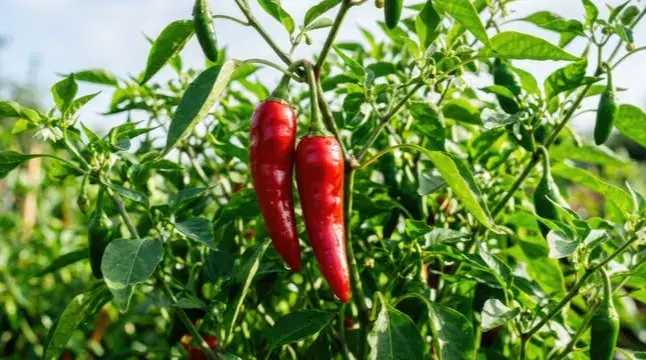
- New season Indian Chilli crop is currently in the vegetative to early flowering stages.
- Insufficient rainfall in the growing areas of Andhra and Telangana is raising speculations about a crop deficit.
- Although an initial estimation of 10% increase in acreage was made, low rainfall has caused low yield expectations to the tune of more than 20%.
- The crop in Madhya Pradesh has been good and bulk arrivals from the same have commenced.
- Demand from both export and export markets is going to play a key role in determining where the new season prices are going to be.
- More clarity on new season price range will be available in the next few weeks’ time.
PAPRIKA:
Harvest Season: November- April.
- Similar to Chilly, paprika new season crop is in the flowering/fruit setting stage currently.
- Low rainfall incidence in Karnataka has kept the crop estimate lower, despite an initial higher seed sales reported to the tune of 30% and above.
- Current market for paprika is upward. Lower carryover stocks and limited availability of pesticide-compliant material are supporting prices.
- Tighter availability of major varieties – Deluxe and Super Deluxe have motivated traders to hold stocks and release selectively to the market.
- Domestic demand is very strong. Weather and irrigation conditions in South India will be key factors influencing crop development and future price movement.
GINGER:
Harvest Season: December- March
- Ginger new season harvesting is progressing in India.
- Although the acreages reported have been higher by 15%-20%, adverse weather conditions like low rainfall and higher temperatures during the vegetative stage have impacted in lower crop yields.
- Despite an overall higher crop output estimate, a major part of this go as green ginger for table use, limiting the availability of dried ginger extraction grade.
- Low carry-forward stocks, higher demand, and a strong farmer preference for selling fresh ginger is keeping the extraction grade market firmer.
- From the initial levels of $2/kg, dried ginger prices have now moved up by another $0.30.
- Market sources indicate further price hikes owing to tighter supply against higher demand. This is almost 15% higher levels than last month and a 60-65% higher than last year same time.
NUTMEG:
India:
Harvest season: May to August
- The season that ended a weeks ago has seen a 10%-15% lower output than previous year.
- Despite lower arrivals, steady demand from the market has helped prices to remain stable.
- Prices are expected to remain firm and may increase if demand strengthens in the coming months, otherwise no sharp fluctuations are foreseen.
Indonesia:
Harvest Season: March- April, July – August
- The El-Nino impact has brought an extreme dry spell to the major cultivating regions, dropping rainfall by almost 60% than normal.
- This has resulted in substantial shrinkage of the crop output. Although prices had moved down during the beginning of 2026, the lower crop output in the current crop has moved prices up.
- Market sources indicate prices to continue moving up further during the off-season.
CARDAMOM:
Harvest Season: August- November
- India, the second largest Cardamom origin in the world, is currently in the middle of its peak harvesting season.
- The new season is witnessing lower production to the tune of 25-30%, heavily linked to severe early-season weather disruptions in key producing regions like Idukki (Kerala) and parts of Tamil Nadu.
- Extreme summer heatwaves followed by an intense deficit of rainfall (up to 40%) during June and July caused failures in peak capsule setting stage, leading to flower drops and stunted initial yields.
- Although good rains received during second half of July and August helped in the crop stabilisation, it was not sufficient to make good the initial damages.
- With lower carry forward stocks, and a good demand from both domestic (festival season) and international markets (especially Middle East regions), cardamom prices are showing strong upward trend.
- The rise in demand for Indian cardamom is also accentuated by a lower crop leading to higher price prevalence in the largest origin of Guatemala.
CORIANDER:
Harvest Season: March – May.
- The 2026–27 coriander farming season has commenced in key producing states such as Rajasthan, Madhya Pradesh, and Gujarat, with the pre-sowing field activities completed.
- Sowing is expected to commence in full swing after mid-November following Diwali holidays.
- Dry weather conditions existing in growing areas may prompt more wheat farmers to move towards coriander. As a result, a 30%-40% higher sowing acreage is estimated. Clearer details of crop acreage can be available only by December.
- Last season carry forward stocks had been minimal, and market arrivals also are staying lower, which is keeping prices firm currently.
TURMERIC:
India:
Harvest season: February - April
- Sowing has been completed across all major growing regions, and development of rhizomes has commenced, although some growing areas experienced delay on account of adverse weather conditions.
- Rainfall received during September has reportedly improved crop conditions in some growing areas. However, the extent of recovery remains uncertain, and final yield prospects are still under assessment.
- No major concerns from pest or disease incidence have been reported so far, which is a good sign. Pesticide compliant material availability is also expected to be lower.
- Despite a 15-20% reported increase in crop acreage, yield reduction to a similar extent owing to lower rainfall in growing areas is raising speculations of lower crop output this season.
- Additionally, 20% lower carryover stocks compared to last season is also fuelling firmness of prices.
- Extraction-grade turmeric is currently quoted at approximately USD 2,360/MT, reflecting steady demand from the sector.
Vietnam:
Harvest season: February - April
- Availability of stocks from last season is limited, mainly due to holding by farmers in anticipation of rising prices.
- High-curcumin turmeric and extraction-grade material continue to receive stronger demand compared to standard grades.
- Prices of available raw material stocks have moved up almost 10%-12% in the last 6-8 weeks, which are currently trading above $2000/MT levels.
Indonesia:
Harvest Season: August- November
- Turmeric acreage in Indonesia has been declining in recent years due to lower price realisations that prompted farmers to turn to other crops like Corn and Elephant Yam.
- Current season harvesting is at its end. Major turmeric-growing regions in Java, Sumatra, and Sulawesi reported generally favourable crop conditions during October, supported by seasonal rainfall and normal crop development.
- The Indonesian turmeric market remained stable to firm throughout October, driven by consistent demand from the food processing and nutraceutical sectors.
- Market is expected to remain firm due to increased demand and lower availability.
- Prices have gradually moved up to $1800-$2000/MT levels, from the earlier existed range of $1600-$1700/MT.
CELERY:
Harvest Season: May- June.
- Celery crop peak arrivals happened during May and June. Below average rainfall received in the major growing areas of the Punjab region has resulted in a shorter crop.
- With literally no carry-forward stocks, a surged demand and a short supply crop situation, Celery raw material prices are running through the roof currently.
- Market has witnessed as sharp as 75% increase in the raw material costs from the season starting. Current price levels of $3000-3200/MT represent historic highs for the crop.
- This is also restricting many extractors and distillers to stay away from processing celery seeds.
- Market continues to remain firm in the next months.
FENNEL:
Harvest Season: February- May
- Sowing of the new season fennel crop has commenced. Almost 20%-25% areas have been sown already. Seed germination also has started in small scale.
- Since last season prices were not lucrative for farmers, new season overall cropped area may be lower. Accurate statistics can be available in a month’s time.
- 2025-26 season crop was almost 30%-40% in output. With nominal carry forward stocks, fennel raw material prices are currently staying very high.
GARLIC:
Harvest Season: March – May.
- New season sowing has been completed in all major growing regions in India.
- With the new season arrivals to commence from end January, and with a reasonably good carry-over inventory from the previous season (25%-30%), price indications for the medium to long term can be known only based on the crop development in the next 2 months.
- Currently prices remain firm and upward, supported by strong domestic demand and controlled arrivals from producing regions. A stable market situation is expected till early next year.
FENUGREEK:
Harvest Season: June-July and October-November.
- Fenugreek sowing is underway across major producing states, including Rajasthan, Gujarat, Madhya Pradesh, Uttar Pradesh, and Haryana.
- Market arrivals remain limited to old-crop stocks, as new-season arrivals are not expected until early 2027.
- Domestic demand from spice processors remains steady, while export demand is subdued.
- Prices remained stable during October at around USD 900/MT.
ONION:
Harvest Season: January- February, April-June, October -November.
- The onion market has become more balanced in October as arrivals from the kharif crop have increased.
- Weather remained supportive for harvesting and post-harvest handling, resulting in good bulb quality and larger sizes.
- Market sentiment remains firm due to limited carryover stocks and steady domestic demand.
- Onion RM prices are currently stable at around USD 527/MT.
- Prices are expected to remain stable to slightly lower as arrivals increase, although strong demand and low old-crop stocks may resist major declines.
CUMIN:
Harvest Season: February- May
- Cumin new season sowing is expected to begin by mid-November after the Diwali holidays and continue through December, with irrigation water availability playing a key role in planting decisions. Land preparation is over and seed treatment is underway.
- Rajasthan, the largest cumin-producing state, remains a concern due to below-normal rainfall during July and August, which has reduced water availability. Coupled with this, the large variations in current temperatures (varying between 22 and 37 degrees) is also not conducive for seed germination. Farmers are holding their sowing decisions.
- Gujarat faces similar challenges, and limited water resources may prompt farmers to shift to less water-intensive crops such as chickpea, potentially reducing cumin acreage.
- Market sentiment remains firm due to concerns over the upcoming crop. Strong prices may continue to support the market, although they could also encourage increased sowing where water is available.
- Market has good amount of carry forward stocks at the same time, high demand especially from the domestic buyers is also supporting prices, complementing the above factor.